

My Favorite Kitchen
A Very Classic Kitchen
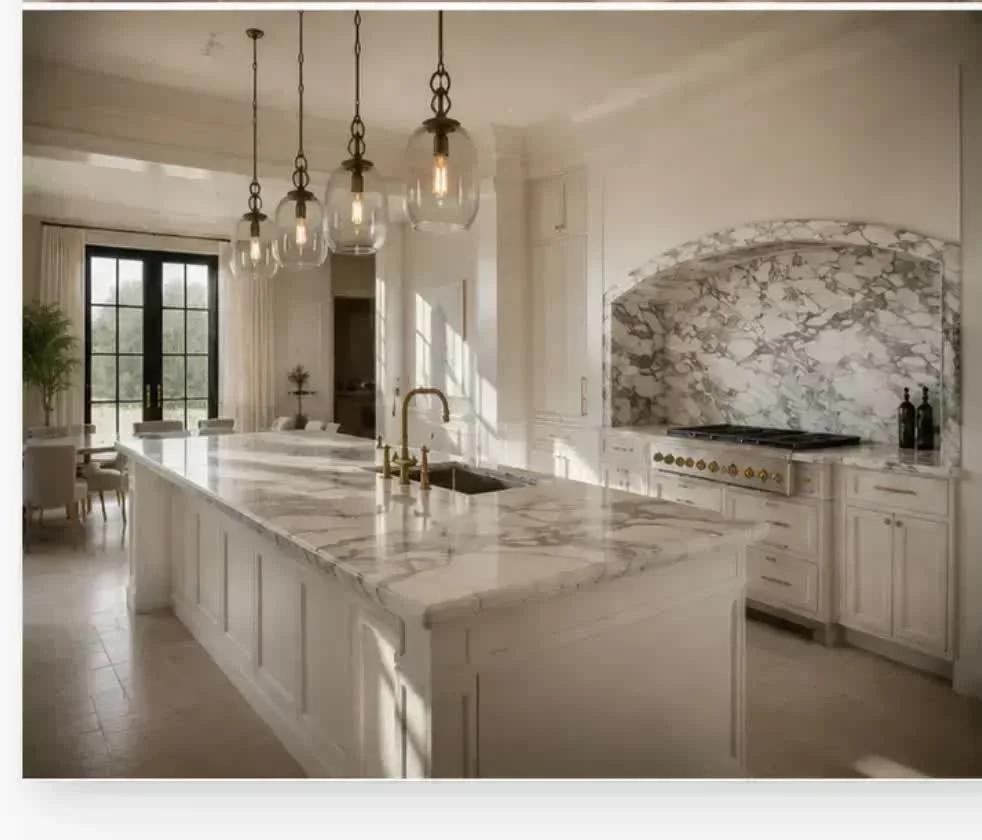
A lot of stone, a few sourcing headaches, and some of my favorite details I’ve ever designed.
When I first ask clients what they love, hate, and can’t live without in a new kitchen, my heart sinks a little every time I hear it: “I know it’s been done, but I really want a white kitchen.”
They have no idea how many white kitchens I’ve designed, how many spec houses I’ve walked through, or how badly I’m dying to let loose, creatively. But that’s the job. The client is the one paying— and living there. Besides the bedroom, the kitchen is where most people spend the majority of their time, so it had better be a room they adore, not one that flatters my portfolio.
There are projects I look back on and see everything I’d change. And then there are the ones that still feel right
.This Chicago kitchen is one of those. Possibly my favorite I’ve ever designed.
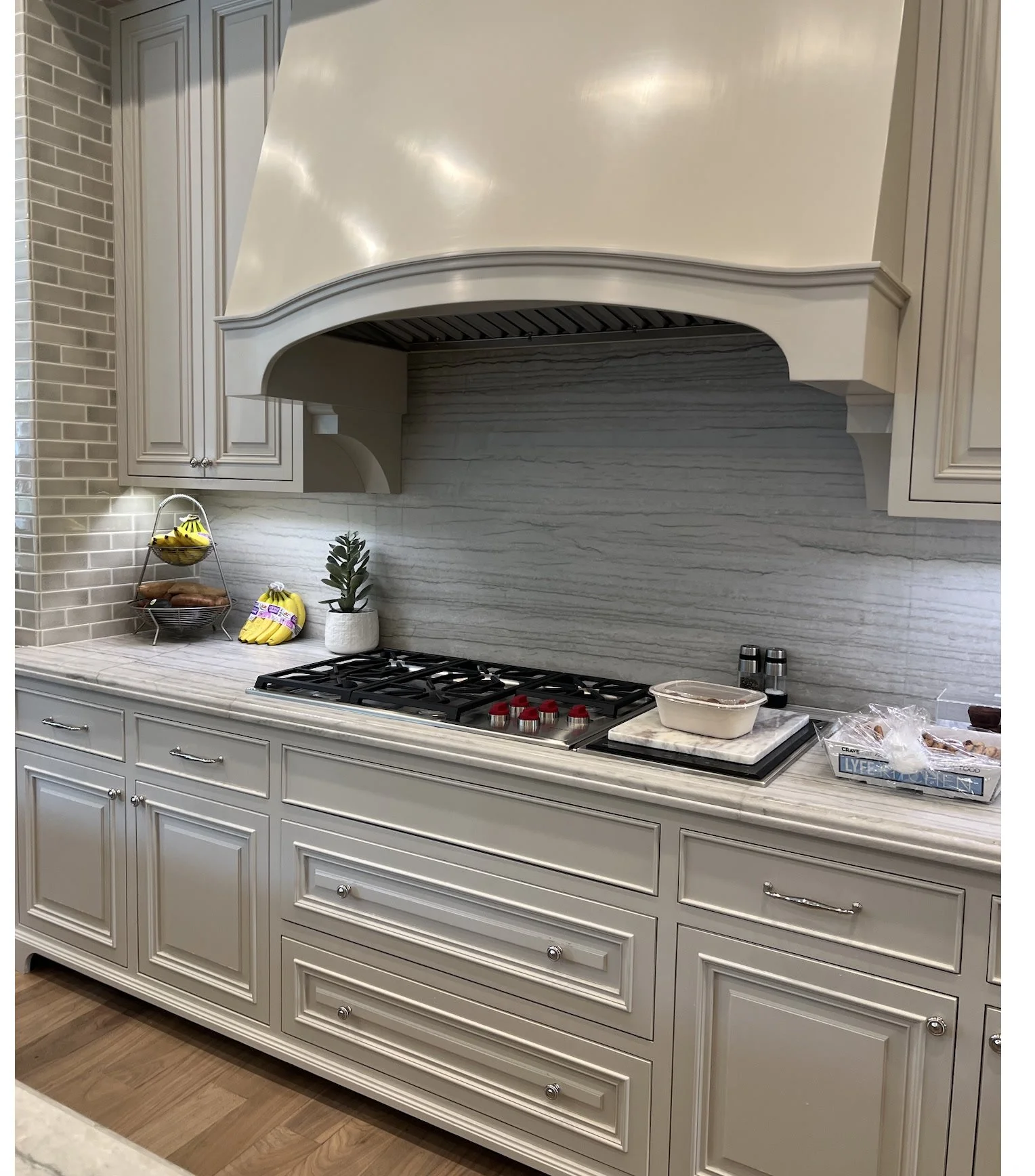
I love sage green as much as the next designer although I may be nearing my breaking point.LOL In this particular kitchen, survived a bad 1990s renovation, in my opinion the cabinetry was too ornate and a dull gray sage. The clients didn’t think it was so bad. I thought it might have been a dealbreaker on the house for many potential buyers.
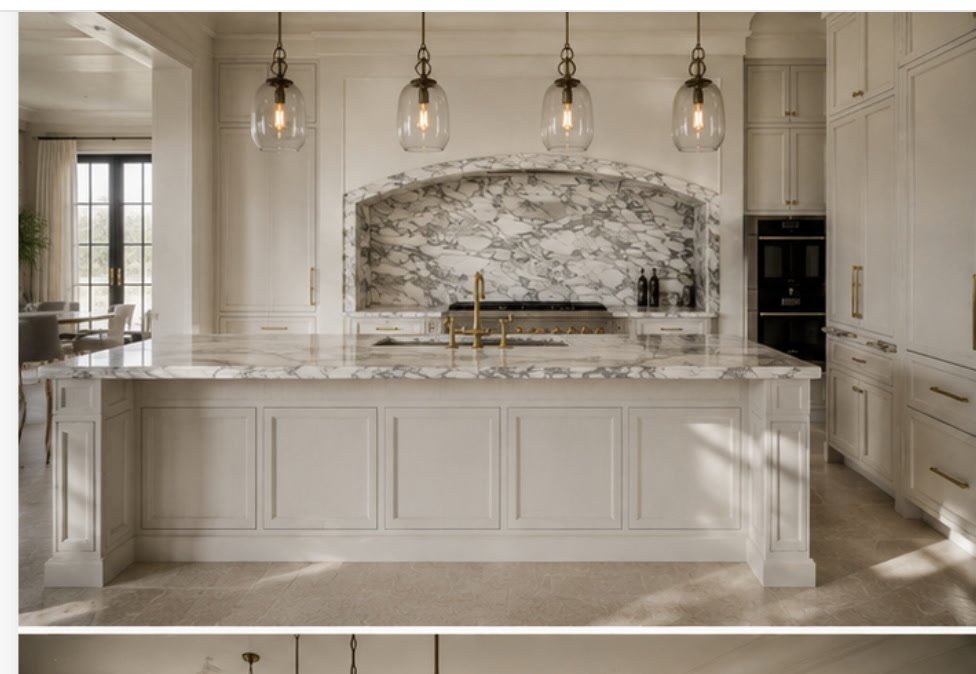
This project is also what truly convinced me of the power of renderings. Most people can’t imagine a space that doesn’t exist yet, or one they’ve never seen before. So our renders helped the client’s visualize an entirely new space.
Background
A Federal-style home in Lincoln Park, Chicago
A busy family of five, with a packed schedule of sports and activities
The Stone Became the Room
The marble was always going to be the moment, and Arabescato Corchia delivered — dramatic, but
still classical enough to suit the house.
Rather than confine it to the countertops, I wanted the range wall to feel architectural. What started as marble framing became an arched surround, five renders later.
That single decision made the range the focal point of the room without introducing another color or material.
There was drama behind the scenes, too. The clients grew frustrated with our original Chicago stone source, so we changed direction and ultimately had the marble brought in through ABC Stone.
You don’t see that in the finished photographs. Sourcing is rarely a straight line — sometimes the best design decision is simply recognizing when it’s time to find another source.
The Cabinetry
The cabinetmakers did beautiful work. Were they always the easiest to get a response from? Not particularly. But the craftsmanship spoke for itself in the end.
On a Los Angeles project, I work from a short list of trusted cabinetmakers — we have a shorthand that makes repeat collaboration easy. On a remote job, though, I’ve found it’s more seamless to work with a kitchen designer on the ground who can take last-minute measurements and make real-time adjustments, because kitchen design is never plug-and-play.
For this project, we took recommendations from the contractor and architect and asked who they liked working with. That’s one of the realities of building a house that doesn’t get talked about enough: in a perfect world, everyone on the team is rowing in the same direction — give the client what they want, and clear anything that slows the project down. In reality, some trades want to control the process, or want to appear more essential than everyone else on the team. Any designer or contractor who claims they’ve never been in a power struggle on a job site probably isn’t being honest with you.
My Favorite Detail
I love the french limestone floors more than I can say and it was very difficult to find one in a 5/8” thickness because most are 3/4” but when you walk into the kitchen you can’t help but me dazzled by the hardware.
It’s one of the most overlooked details in a kitchen — and one I refuse to fake. You touch it every single day. Solid brass has a weight in your hand that plated hardware simply doesn’t. By this point in a project, though, clients are tired of spending money, and hardware can feel like the last thing worth splurging on.
I’ve stood in kitchens with so many pulls you can’t focus on anything else, and in kitchens where the hardware looks like an afterthought. On this project, I knew the clients valued quality and aesthetics over price, so I went with one of my favorites: Armac Martin, an English brand with beautifully restrained styling.
In a very classic kitchen, small hits of unlacquered brass with detailing that reads more jewelry than hardware brought in the richness and warmth the space needed.
It’s a decision I’d make again without hesitation.
What I Would Change
If I were designing this kitchen today, there’s one thing I’d add without hesitation: a 48-inch range.
Real life gets in the way of aesthetics sometimes, and as a designer, you go with what the clients are telling you. In this case, they’d bought brand-new appliances a year before hiring me and didn’t see the need to replace them. So we made do with a cooktop, even though in my head I saw a gorgeous La Cornue or Lacanche in a striking color.
That’s one of the interesting things about revisiting your own work: a room can still be a favorite, and you can simultaneously see the one decision you’d make differently today.
Good design was never about getting everything perfect. It’s about continuing to get better — and knowing when to defer to the client’s reality.
Before
A Surprise
Unfortunately, I don’t have finished photographs of the butler’s pantry, which may have been one of my favorite spaces in the house.
After all that cream in the main kitchen, we shifted the mood entirely and designed the pantry in French oak, with a built-in coffee bar. It brought a warmer, quieter moment to the house.
There’s a design lesson in that, too: not every room needs to repeat the one next to it. Sometimes contrast is what makes both spaces work harder.
The Secrets I’d Steal From This Kitchen
Let one material be the star. The marble has enough personality that nothing else needs to compete with it.
Bring in a surprise element. Brass, stone, and wood keep a pale room from feeling sterile. In the butler’s pantry- we clad the entire thing in white oad with the arrabescato corchia as backsplash.
Spend money on what you touch. Solid brass hardware is something you experience every day — plated hardware isn’t.
Your original source isn’t sacred. If something isn’t working, change course.
Design for how you actually cook. Today, I’d make that range wall work even harder with a 48–60” La Cornue.
That’s what I’d keep. And that’s what I’d change.
Originally published on Design Secrets ..... spilled: https://annecarr1.substack.com/p/my-favorite-kitchen