

I have shiny object syndrome. Every time something gets flashed in front of me, I’m convinced I need to buy it, upload it or learn it. I don’t think this was a problem before the internet and social media, but it’s a problem now. You only have to look at my bathroom shelf: more vitamins and skincare than I can count, and I couldn’t tell you what half of them are meant to repair.
AI is no different. I currently pay for Claude, Grok, OpenAI, Google AI Studio, Muse and Magnific and probably more that I cannot remember. I’ve reached the point where I can’t always tell you which one created what, or where it’s saved.
In my defense, they really are good at different things. Claude is where I go to make a plan and map it out. For images, Google’s Nano Banana was the one to beat for a while, and in my opinion OpenAI has now caught up. I keep Magnific because it puts a lot of image and video editors in one place.
I’ll eventually cancel the ones I don’t need. For now there’s so much to learn that I’m not ready to cut any of them.
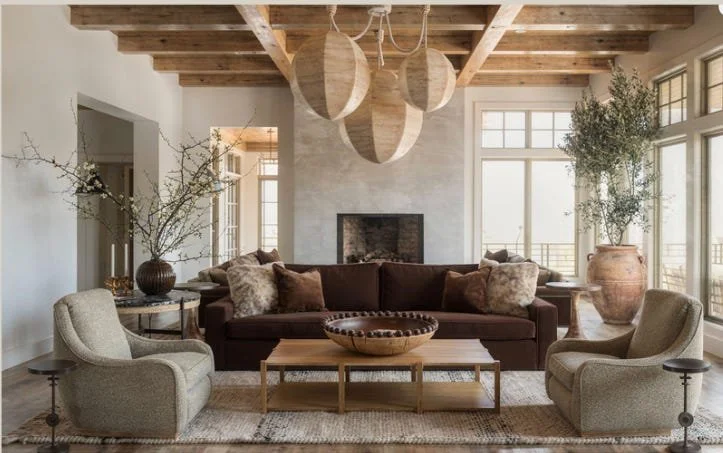
rendering: designed by ACD using Nano Banana
Here’s the part that matters for you: I used these tools to build a rendering of a room from scratch, and I kept notes. Below the line, you’ll find the exact prompts, in order, what failed along the way, and what I’d change as a designer.
I rarely am asking AI to create rooms from scratch. I usually feed it a floor plan and some of the items that I want to put in the room. Most LLM’s have gotten really good at pulling up fabrics if you give the proper codes, but a picture is the best way to get your thoughts across. So some of the prompts from the beginning are no longer necessary.
Here is an example of a prompt that I wrote about 9 months ago. Used Magnific.
Interior design photorealistic rendering of a luxury living room in a contemporary vacation home, based on an architectural floor plan. Wide-angle eye-level view.
Layout: On the far wall (north), a low fireplace with a wide 88-inch built-in storage/media console runs along the wall, with a large flat-screen TV mounted above the fireplace, flanked by two sconces. In the center of the room, a burnt-orange mohair velvet daybed-style sofa with a low wraparound arm, bolster back cushion, and dark wood block feet is positioned perpendicular to the TV wall (running left-right across the room, not facing the TV head-on), paired with a matching second sofa or bench facing it, creating a face-to-face seating arrangement with an oval glass-top coffee table with a bronze/walnut curved wood base and tapered legs set between them, on a large neutral wool area rug. To the right side of the room (east wall), two sleek modern desks with light oak wood tops and angled blackened-steel and brushed metal panel legs are placed against the wall with clear space between them, each with a simple task chair. The opposite wall (south) is lined with a wide bank of windows and sliding glass doors leading to an exterior deck, filling the room with natural daylight. Walls are painted a warm soft white/greige, wide-plank white oak flooring, exposed ceiling beams in a natural wood tone. Sophisticated, warm contemporary luxury aesthetic — layered textures, mixed metals, editorial interior photography style, soft natural window light, shot on a full-frame camera, architectural digest quality, no text or watermarks.

Now, I give the AI the pictures of the desks, sofas, rugs, and tell it where they are from. What I spend a lot of time on is correcting the upholstery. In this rendering I thought the sofas were a little out of proportion so I gave it this prompt:
“The sofa’s fabric is correct but the seats look like they are greater than 40” deep can you correct if they are bigger than 36. ““ The difference is slight but I can tell.

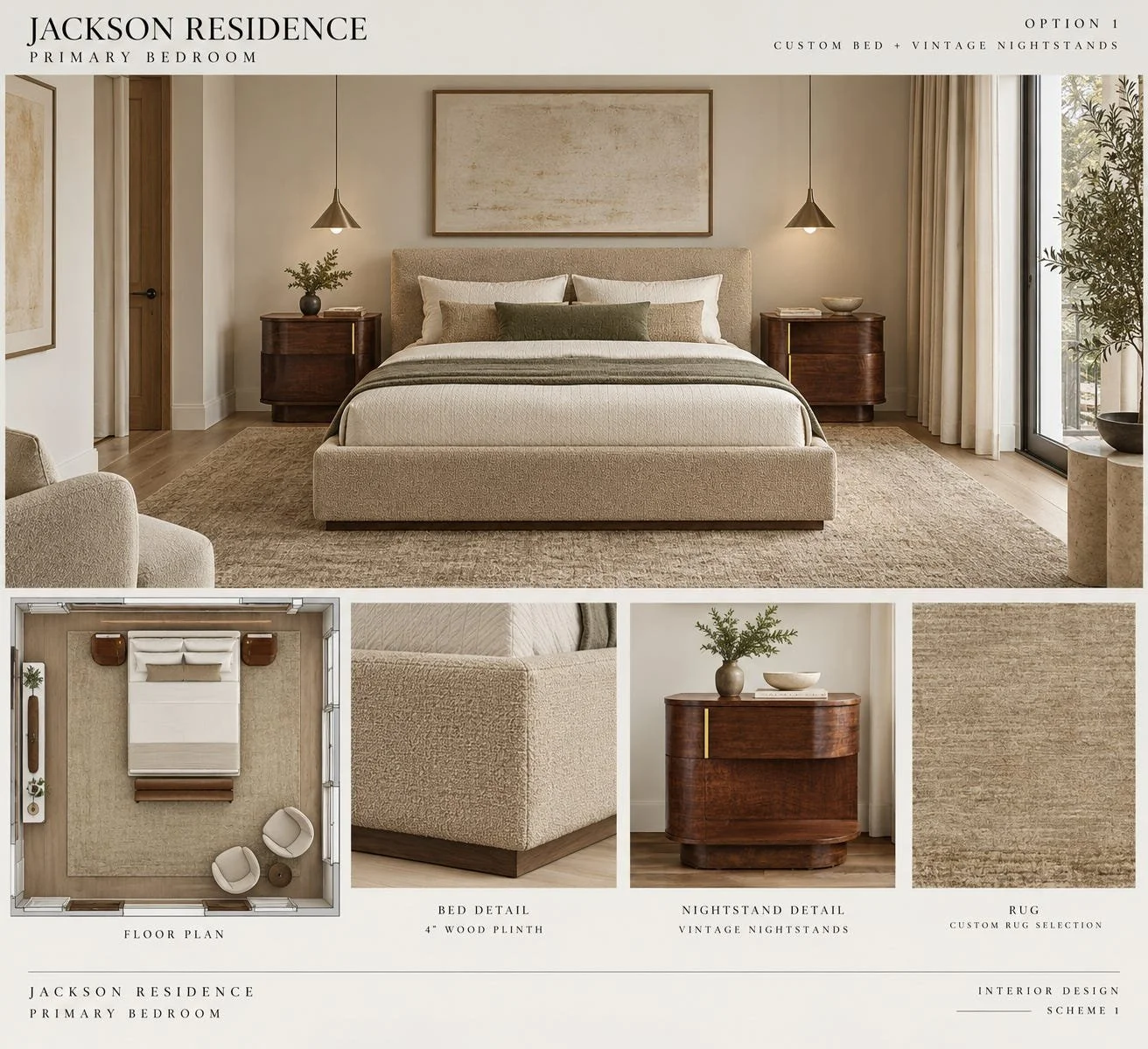
I gave Chatgpt the individual images of each piece of furniture, the rug and lighting , and a floor plan and gave it the individual images shown at the bottom of this drawing and the full render above it. I did not supply the artwork and accessories but if I wanted to change them, first I would verbally tell it to and provide what I want. If that doesnt work I usually say things like, “ remove the plant on left nightstand…”
Let me know what you would like to learn in AI. I’m not an expert but I’ve been using since January which in AI time, that’s like 5 years.